
Evaporator (DX) Coils
At HeatEX Technologies, we craft high-quality evaporator (dx) coils, recognized for their robustness, design versatility, and exceptional heat transfer capabilities. Our evaporator (dx) coils deliver dependable and effective solutions across a myriad of applications.
What are Evaporator COils?
An evaporator coil is the part of an air‑conditioning or refrigeration system where heat is absorbed. If the condenser coil is the system’s “exhaust,” the evaporator coil is its “intake.” It’s where the refrigerant becomes cold, absorbs heat from the air, and produces the cooling effect you actually feel.
Process behind the Evaporator Coil
An evaporator coil is a heat‑exchange coil located on the indoor side of an AC, heat pump, or refrigeration system. It contains cold, low‑pressure refrigerant that evaporates inside the coil.
As warm indoor air blows across the coil:
- The refrigerant absorbs heat
- The refrigerant boils/evaporates into a vapor
- The air leaving the coil becomes cooler and drier
This is the heart of the cooling process.
Applications of Evaporator (DX) Coils
- Air Handling Units (AHUs): Used to cool large volumes of supply air in office buildings, hospitals, and schools where packaged or split DX systems provide direct, efficient cooling without a chilled‑water plant.
- Rooftop Units (RTUs): Serve retail stores, warehouses, and mid‑size commercial buildings by using DX evaporator coils to deliver reliable, self‑contained cooling directly from the roof.
- Walk‑In Coolers and Freezers: Provide low‑temperature refrigeration by absorbing heat from stored food or materials, maintaining precise temperature control for commercial kitchens and industrial cold storage.
- Industrial Process Cooling: Cool machinery, production lines, or controlled environments by removing heat directly from process air streams where tight temperature control is critical to product quality or equipment protection.
Evaporator coils are used because the refrigerant inside them boils at a low temperature, and that phase change absorbs a large amount of heat from the air or process stream, making them the most efficient way to produce cooling and dehumidification in a system
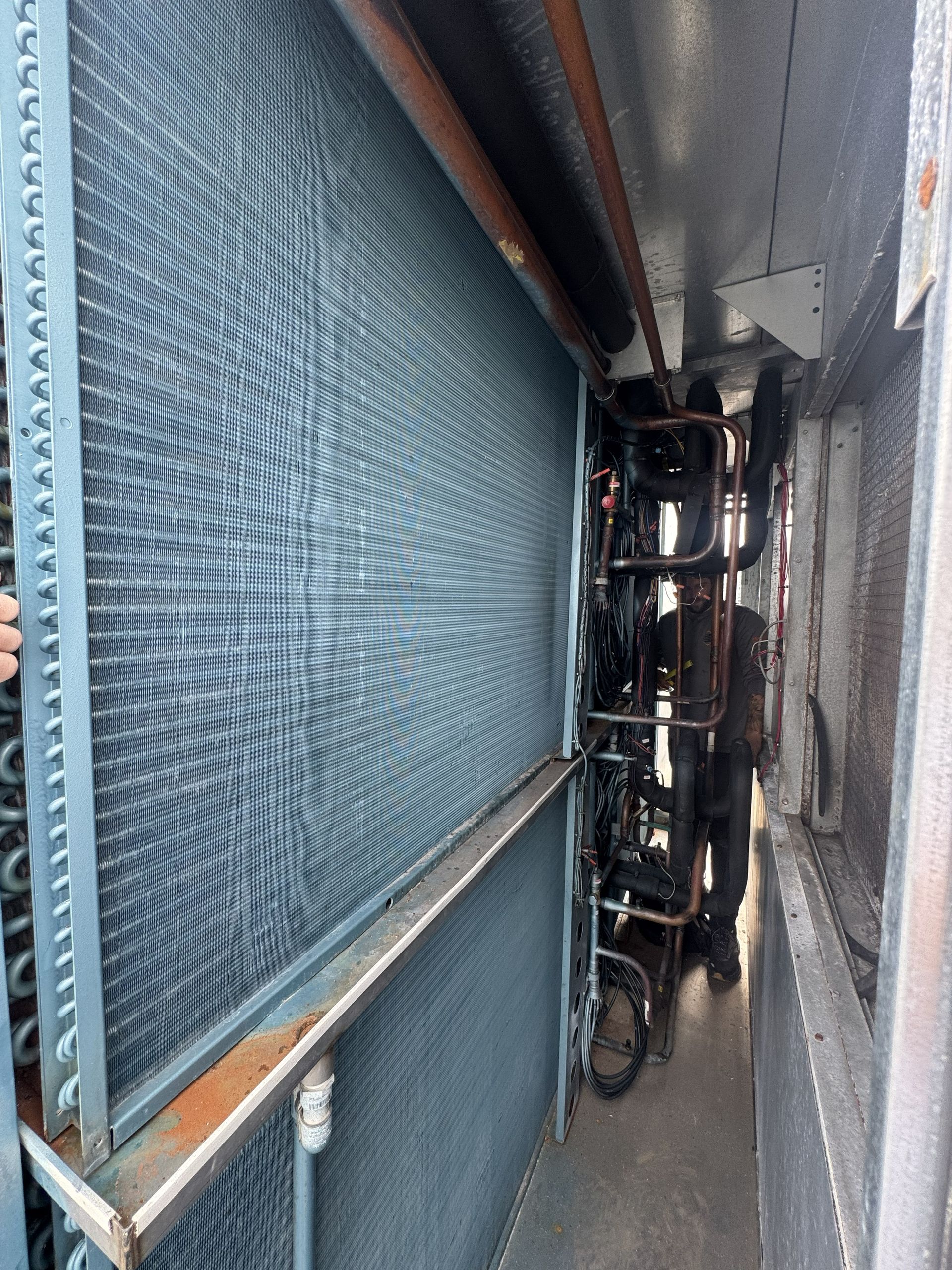
How HeatEX Can Help
HeatEX Technologies provides custom evaporator (DX) coils fit to any circuiting, refrigerant capacity, distributor design, and capacity. At HeatEX, we work directly with our customers to engineer custom coils fit to the specific applications, performance needs, and constraints of each job. Additionally, we can provide direct like-for-like replacements when given measurements of damaged or failed units. In order to ensure a perfect replacement fit, we prefer to come out to the jobsite and measure each unit ourselves. This takes the worry away from the customer and ensures correct fit and functionality for our replacement products.
We manufacture dx coils to your specific size or performance. If you are looking for a dx coil, be sure to reach out!