Why Coil Replacement Jobs Get Delayed, and How to Prevent Them

Colby Maun • August 17, 2026

Delays in a commercial HVAC coil replacement project are one of the most frustrating things that a facility manager or contractor can face. A failed coil already creates problems such as comfort issues, downtime, and pressure from building owners, so making sure that your coil replacement project goes smoothly and without delay is crucial. To assist you with your next coil replacement job, here are some common causes of commercial HVAC coil replacement project delays and how you can prevent them in your job. 
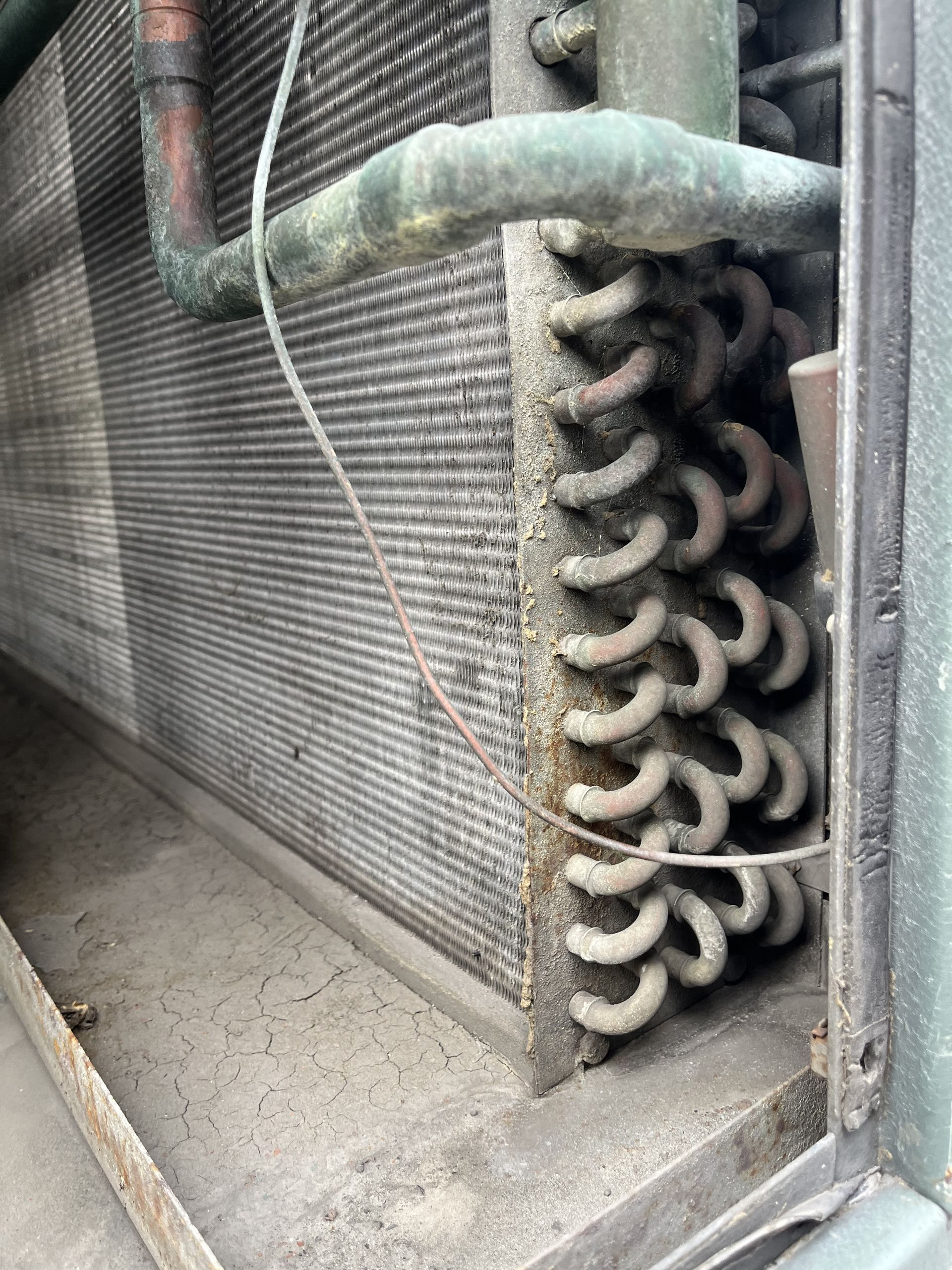
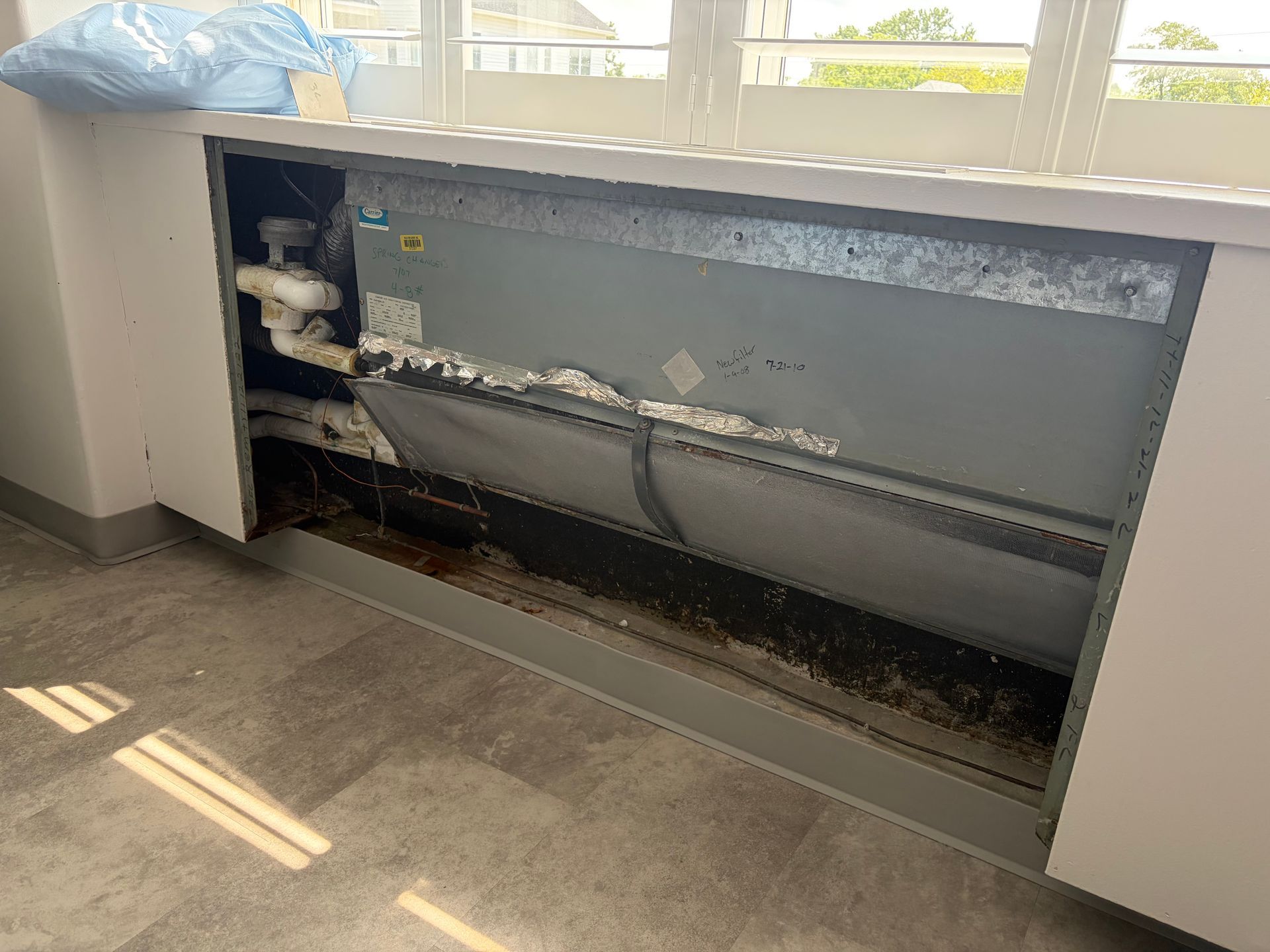
The first cause of a coil replacement project delay is incorrect or incomplete measurements. The measurements are the start of a replacement job, so if they are off, the entire project will be off and most likely delayed. If the measurements are incorrect when the coil is fabricated, it takes extra time to go back, remeasure, and then remake a new coil. This can be prevented with thorough measurement-taking. Taking measurements in multiple locations, taking pictures of the coil and surrounding equipment, documenting connection locations, recording dimensions, and having measurements reviewed before the coil is fabricated are all good measurement practices to reduce the risk of incorrect measurements delaying your replacement job.


Another cause of delay is missing equipment information and unclear performance requirements. Missing information, such as equipment manufacturer/model, serial number, and documentation, as well as unclear performance requirements such as water flow and entering/leaving air and water temperatures, can severely delay any project. This sort of information can be essential to properly engineering and manufacturing a replacement coil. The best way to prevent this in your own job is to collect information before you request a quote. This will ensure that if there is a gap in your equipment requirements or information, you have time to find it before the project is already underway.

One of the last major causes of replacement project delays is a lack of communication between the manufacturer, contractor, and jobsite. Poor communication is one of the quickest ways to delay a commercial coil replacement project, so making sure that every team is on the same page is critical from start to finish in the project. If questions aren’t answered quickly, or information isn’t conveyed clearly, this will cause the project to be delayed. The best way to prevent poor communication is to choose the right company to work with and make sure to have a clear point of contact so that information can be centralized.


HeatEX Technologies prides itself on exceptional customer service that prevents issues such as these from occurring in your replacement project. We are problem solvers, which means that if you are having issues measuring or gathering equipment information, we will do as much as we can to help walk you through the processes and solve any problems you run into. We provide fast responses and effective communication so that you are never in the dark about your project. So often, the vendor that you work with on your replacement projects impacts any delays in your job, which is why choosing HeatEX Technologies is one of the best decisions that you can make to reduce delays and downtime on your coil replacement jobs. 
By Colby Maun August 11, 2026
Commercial chilled-water and hot-water HVAC coils appear almost identical on the outside; however, they are more different than most people think. Both are water-based heat transfer components, but they work opposite each other and are better for different applications. Here is a full breakdown of the differences between chilled water vs hot-water coils, and how to decide which to use for your application.
By Colby Maun August 3, 2026
For buildings that require targeted zoning, such as hotels, offices, apartments, hospitals, retail spaces, and more, fan coils can assist in maintaining a comfortable indoor temperature. Each fan coil unit serves a particular space, which allows individual occupants to control their area of a building without affecting the rest of it. Understanding fan coils and how they work can help facility managers of these styles of buildings more properly maintain and replace units to prevent downtime in their systems. Here is a breakdown of how they work, the different types, and the common problems that they run into in their life cycle.
By Colby Maun July 27, 2026
In commercial HVAC, one of the largest yet overlooked aspects of a custom coil replacement job is the materials that the coil is made of. Different materials thrive better in different systems and environments, which affects the lifespan and efficiency of the coil. Making sure that your replacement coil is best suited for your unique system and location is integral to any facility, and failure to do so can increase costs and decrease reliability. Here is a breakdown of each material in your coil and what scenarios to select each in.
By Colby Maun July 20, 2026
For any coil or heat exchanger replacement job, one of the first steps in the process is for HeatEX Technologies to measure the existing coil/heat exchanger to ensure a perfect fit in the unit. Recently, I had the privilege of going out to my second job site to take measurements with HeatEX Technologies. Here is my account of what actually goes into measuring a coil, and my experience from start to finish.
July 13, 2026
After multiple refrigerant leaks sprang from a Trane CGAM070 air-cooled chiller in West Palm Beach, FL, our customer faced a difficult challenge. They had to decide whether to replace the failed microchannel condenser coils with new OEM microchannel coils or pivot and invest in a different, longer-term solution. After much evaluation, our customer decided to convert the chiller from aluminum microchannel coils to copper tube aluminum fin condenser coils.
By Colby Maun July 6, 2026
Last week, from June 27 th to July 1 st , ASHRAE held its 2026 Annual Conference in Austin, TX, and brought together more than 2,233 HVAC professionals from all over the world. The conference covered a broad range of many topics prevalent in the industry today, from fundamentals and applications to AI in building design and construction. Here are some of the biggest takeaways from the 2026 ASHRAE Annual Conference for commercial HVAC.
By Colby Maun June 29, 2026
In a commercial HVAC unit, coil failure is one of the most frequent and costly problems a system can have. Coil failure in a commercial HVAC unit leads to performance, efficiency, and reliability issues, making it one of the most important aspects in the system. Coils can fail for many different reasons, and understanding when a coil is starting to need replacement can save facility managers tons of extra downtime and stress. Here are 5 warning signs that your commercial HVAC coil needs replacement, so that the next time your coil fails, you can be on top of the problem.
By Colby Maun June 22, 2026
What exactly makes a custom coil custom? Most facility managers assume that a custom coil only differs from OEM in sizing. The reality is that dimensions are only a fraction of what makes a custom coil custom. Each job is different, with many different factors going into a custom coil, such as dimensions, tube configuration, fin design, materials, and performance requirements. The most commonly thought of aspect when it comes to custom coils is the dimensions. This includes height, width, and depth of the coil, which allows for custom replacement coils to fit perfectly into the system they are designed for. Doing this without major modifications is crucial when manufacturing a custom replacement coil. The tube configuration of the coil also plays a very important role in customization. The circuitry, number of rows, and tube diameter all impact this aspect and contribute to the efficiency and heat transfer of a custom coil.
By Colby Maun June 18, 2026
As a building gets older, it becomes much more likely to experience several different types of HVAC failure, which results in decreased efficiency and reliability in the system. Considering the fact that most commercial buildings in the US were built between 1970 and 2000, this aging infrastructure is becoming increasingly problematic in the world of HVAC. To increase difficulty, many organizations postponed renovation and retrofit projects during COVID and during times of economic uncertainty and inflation. Those decisions extended HVAC equipment beyond its initial design life in many cases, and now that it is finally time to renovate, there are significant challenges to doing so in those buildings. With today’s rising equipment costs, aging building stock, high energy costs, sustainability pressures, and limited budgets, many facility managers are burdened with attempting to keep their equipment running smoothly. As HVAC systems age, they experience coil degradation, efficiency losses, corrosion, and increased failures and downtime in general. Coils are usually one of the first parts to deteriorate, as they are exposed to plenty of different weathering aspects in the air, such as salt, moisture, and pollutants, to name a few. When a coil deteriorates, it reduces system capacity as a whole. Efficiency losses in older units are common as well, since with time, the unit has to work harder and harder to remain operating at the same capacity as it was when it was new. Reliability decreases for units due to increased unexpected failures and downtime, along with it becoming harder to source parts for repairs as technology advances and changes.
June 11, 2026
Location: Hotel – Fort Lauderdale, Florida  Overview: A 6-year-old York YCAV air-cooled chiller serving a hotel experienced premature condenser coil failure. Out of 10 total coils, 4 had already failed (40%), with the remaining coils showing active corrosion. The unit operates continuously, making reliability critical for guest comfort